The right equipment depends on how much cardboard you produce, how much space you have, and how you want it hauled away. For most stores and many warehouses, a cardboard baler is the starting point. For sites with heavy volume or very little floor space, a roll-off or compactor can be the better fit. Here’s how to tell which one your facility needs.
Cardboard Baler: Best for Steady, Manageable Volume
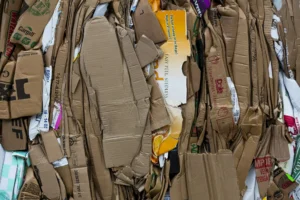
A cardboard baler compresses broken-down boxes into dense, tied bales. Bales stack neatly, take up far less room than loose boxes, and are what the recycling market wants. Because baled cardboard has value, a cardboard baler is also the first step toward our recycling brokerage program for businesses with a qualifying volume.
Greene Recycling picks up bales from 180 lbs up to 1,200 lbs, so a cardboard baler of almost any size can work. A compact unit in a convenience store and a full-size machine in a distribution center both produce bales we can haul. Pickups run weekly, bi-weekly, or monthly. See bale pickup for details.
Buying or Replacing a Baler
If your current baler can’t keep up, boxes pile up fast and it may be time for a different size. Greene Recycling sells new and used balers in 48-inch, 60-inch, and 72-inch sizes and can set up installation if you need it. Whatever machine you run, train staff to run full cycles and keep plastic film and trash out of the chamber.
20- and 30-Yard Roll-Offs: Best for Large Loads and Cleanouts
A roll-off is an open container that holds loose cardboard. It needs no operator and no baling, which makes it useful for sites that produce a lot of cardboard in bursts, such as remodels, store resets, or warehouses receiving large shipments. Greene Recycling offers 20- and 30-yard roll-offs with dump and return service: we haul the full container, empty it, and bring it back.
The tradeoffs are space and value. A roll-off needs room outside for the container and for the truck to load it. Loose cardboard is also bulkier than bales, so you’ll typically need more hauls for the same amount of material. Learn more about roll-offs.
40-Yard Compactors: Best for High, Constant Volume
A compactor crushes cardboard into an enclosed container, so it holds far more than an open roll-off and keeps material out of the weather. It suits facilities that generate cardboard all day and don’t want staff stopping to bale. Greene Recycling offers 40-yard compactors to rent or buy. See compactors.
Matching Equipment to Your Facility
- Retail and chain stores: usually a baler in the back room with a regular pickup. See retail.
- Grocery and convenience: a baler handles daily deliveries well. High-volume grocery sites may pair it with weekly pickup.
- Warehouses and distribution: a large cardboard baler, a compactor, or both, depending on volume and dock space. See warehouses.
- Manufacturing: compactors or roll-offs often fit production lines that produce steady loose packaging. See manufacturing.
- Restaurants and food service: often a small baler. Keep food waste away from the cardboard so bales stay clean.
Questions to Ask Before You Choose
Start with a few practical questions. How many boxes come in each week? Is the volume steady or seasonal? How much indoor space can you give to equipment and finished bales? Is there outdoor room for a container and a truck? Who on your staff will run the equipment? Your answers usually point to one option quickly.
Why Bales Usually Hold More Value
As a recycling broker, Greene Recycling sells baled cardboard into the recycling market, and for qualifying volumes part of that value may come back to you as a rebate. Clean, dry bales from a cardboard baler are exactly what mills want. Read about recycling brokerage. For background on how much paper and cardboard gets recycled nationally, see the EPA’s paper and paperboard data.
Get Help Picking the Right Setup
Not sure what fits? Tell us about your space and your volume, and we’ll recommend equipment and a pickup schedule for each location. Request a quote or call 512-630-5108.